
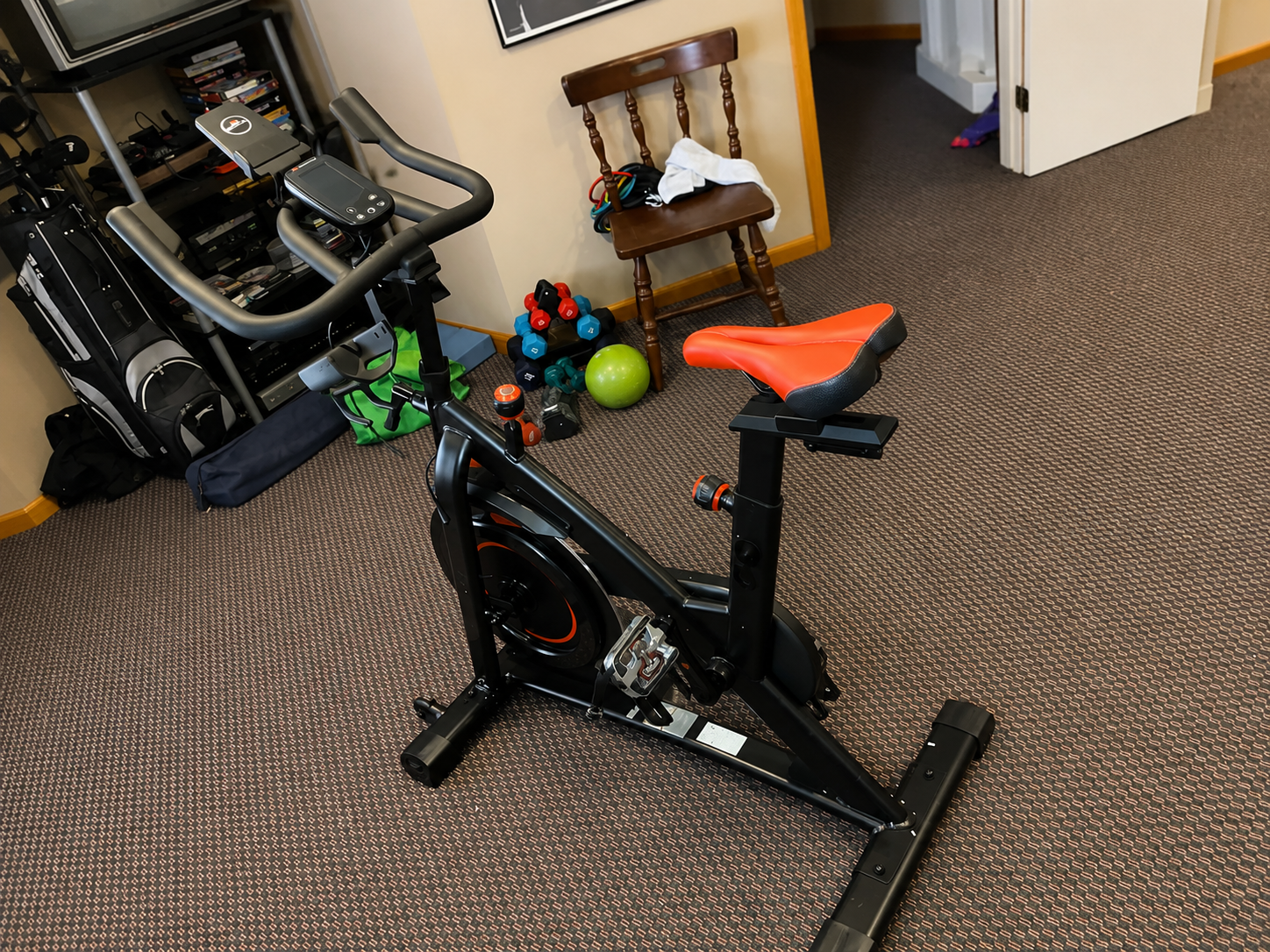
Exercise bike work without the guesswork
Exercise bikes look simple from the outside, but the job changes quickly once resistance systems, pedals, crank arms, drive belts, consoles, wiring, sensors, frame hardware, stair access, and final placement are involved.
We review the bike type, model, symptoms, access path, parts, and scope before treating the job like a basic assembly or simple carry-in.
Common exercise bike jobs
We help with new exercise bike setup, delivery, moving, diagnostics, resistance issues, pedal and crank problems, customer-supplied parts, and old bike removal.
- Exercise bike delivery and room placement
- Exercise bike assembly, setup, leveling, and basic function checks
- Spin bike, upright bike, recumbent bike, air bike, indoor cycling bike, and smart bike service
- Resistance troubleshooting for manual, cable, magnetic, electronic, and air-resistance systems
- Pedal, crank, seat, handlebar, belt, flywheel, and frame hardware issues
- Console, wiring, connector, battery, sensor, and power-related checks
- Customer-supplied part installation when the part is compatible and the bike is serviceable
- Exercise bike moving, disassembly, relocation, and haul-away when access allows
Spin bikes, upright bikes, recumbent bikes, air bikes, and smart bikes
Different exercise bikes have different service issues. Spin bikes often involve pedals, crank arms, belts, flywheels, resistance knobs, brake pads, and seat or handlebar hardware. Upright and recumbent bikes may involve consoles, sensors, wiring, resistance motors, covers, and frame access.
Air bikes add fan resistance, drive linkage, arms, pedals, chain or belt systems, and frame movement. Smart bikes add electronics, power, console response, sensors, resistance control, and model-specific parts.
When resistance feels stuck, weak, uneven, or unresponsive
Exercise bike resistance problems can come from a loose or broken cable, worn belt, magnet position, manual knob issue, brake pad wear, sensor problem, console setting, wiring fault, resistance motor issue, or incompatible replacement part.
Manual resistance, magnetic resistance, air resistance, and electronic resistance are not diagnosed the same way. Photos, model information, and a short symptom video help determine what type of system the bike uses before service.
Loose pedals, stripped threads, crank movement, and drive issues
Loose pedals and crank issues can come from incorrect assembly, worn threads, loose fasteners, damaged crank arms, cross-threaded pedals, belt or chain issues, or part failure. Some issues can be corrected with adjustment or reassembly, while stripped threads or damaged crank arms usually require compatible replacement parts.
If the bike clicks, grinds, wobbles, slips, or feels uneven while pedaling, a short video with sound is usually more useful than a written description.
Power, wiring, console response, and sensor checks
We can inspect accessible wiring, connectors, reed sensors, speed sensors, batteries, power connections, resistance connections, console harnesses, and customer-supplied electronic parts. Multimeter checks may be used where appropriate.
Some enclosed electronics, sealed consoles, proprietary control parts, and model-specific components require replacement parts or manufacturer-level support. Diagnostics can identify likely causes, but not every electronic problem can be repaired on site.
Room moves, stairs, relocation, and old bike removal
Exercise bikes are usually easier to move than treadmills, but they can still be awkward. Console shape, handlebar width, pedal clearance, frame size, flywheel weight, stair width, tight turns, and whether parts need removed can all change the job.
Old exercise bike haul-away depends on size, weight, condition, stairs, parking/loading access, and the disposal or drop-off scope agreed before service.
What can limit the job
Some repairs require compatible parts before the bike can be fixed. Stripped pedal threads, damaged crank arms, failed consoles, proprietary resistance parts, missing covers, damaged wiring, cracked frames, or sealed electronics can limit what can be completed during a standard visit.
Some moves may require partial disassembly, and some bikes cannot be moved safely through certain stair paths, turns, narrow doorways, fragile flooring, or tight rooms without removing parts first.
What to send before scheduling
Clear photos and model information help us quote the correct exercise bike service and avoid guessing from a vague symptom description.
- Brand and model number
- Photos of the full bike
- Photo of the model label, if available
- Photos of the pedals, crank arms, console, resistance area, wiring, damaged part, or problem area
- Short video of resistance problems, clicking, grinding, slipping, wobbling, no-power issues, or console faults
- Photos of stairs, turns, doorways, hallways, basement path, garage path, or final room
- City/ZIP and parking or access notes
- Whether the job is assembly, delivery, repair, resistance troubleshooting, moving, disassembly, relocation, or haul-away
- For customer-supplied parts: photos of the part, part number, and bike model label
Columbus and Central Ohio exercise bike service
We regularly serve Columbus and nearby Central Ohio communities including Worthington, Dublin, Hilliard, Westerville, Gahanna, Reynoldsburg, Grove City, Delaware, Powell, Pickerington, Lancaster, Newark, and surrounding areas.
Larger, multi-item, commercial, or route-based Ohio projects may be available depending on timing, distance, access, item count, and scope.
Ready to schedule or choose the right exercise bike service?
Send the bike model, photos, location, access path, and what you need done. We will review whether the job is assembly, delivery, repair, resistance troubleshooting, moving, relocation, disassembly, haul-away, or another exercise bike service.