
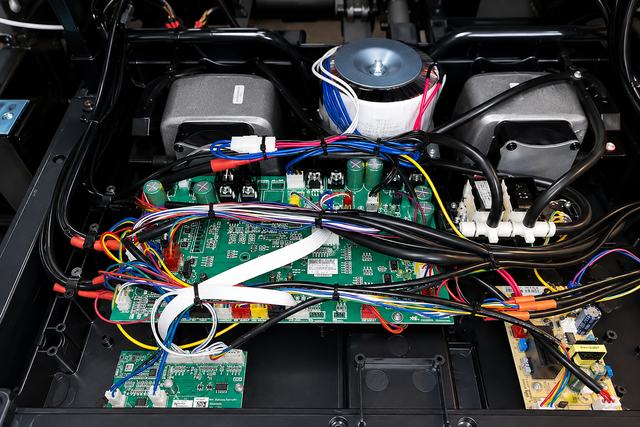
Repair work starts with the symptom
A repair is not just “replace a part.” We look at what the item is doing, what changed, what was moved or assembled recently, what error codes appear, what sounds wrong, and whether the issue is mechanical, electrical, alignment-related, access-related, or caused by missing or incorrect hardware.
The goal is to narrow down the problem clearly, explain what is practical, and avoid pretending every item can be fixed with a simple part swap.
Common repair and diagnostic jobs
We handle practical troubleshooting and correction work across assembled products, fitness equipment, massage chairs, furniture, outdoor products, and customer-supplied replacement parts.
- Fitness equipment diagnostics, treadmill repair, belt issues, sensor problems, motor-area checks, console symptoms, and control-board-area troubleshooting
- Elliptical, exercise bike, rower, home gym, cable machine, pulley, resistance, pedal, rail, and frame-related repair support
- Massage chair no-power, remote/controller, stuck recline, stuck footrest, motor, sensor, switch, wiring, and control-board symptoms
- Furniture drawer, door, hinge, hardware, leveling, alignment, and assembly-correction work
- Shed door alignment, hinges, latches, loose panels, roof seating, and hardware correction where the base and parts allow it
- Trampoline springs, pads, nets, poles, sleeves, hardware, and compatible customer-supplied part replacement
- Outdoor product repair, loose hardware, brackets, panels, anchors, latches, and practical adjustment work
Treadmills, ellipticals, bikes, rowers, racks, and cable machines
Fitness equipment repair usually starts with the symptom: belt slipping, belt tracking, no power, an error code, resistance not changing, console not responding, rubbing, squeaking, loose pedals, binding cables, frame movement, or a machine that started acting wrong after a move or assembly.
We can inspect accessible wiring, sensors, motors, consoles, control-board areas, belts, decks, rollers, cables, pulleys, resistance systems, rails, pedals, frames, and compatible customer-supplied parts. Some repairs require model-specific parts before the repair can be finished.
No-power, stuck movement, remotes, wiring, motors, and sensors
Massage chairs combine heavy furniture with electrical controls, moving mechanisms, motors, sensors, switches, remotes, rollers, airbags, wiring harnesses, and control boards. A symptom that looks simple from the outside may come from a connector, switch, motor, sensor, control area, or damaged moving section.
We troubleshoot many accessible massage chair symptoms and can install compatible customer-supplied parts when the chair is serviceable and the part matches the model.
Alignment, adjustment, missing hardware, panels, doors, and loose parts
Not every repair is electrical. Many service calls are alignment and assembly problems: drawers that will not close, cabinet doors that sit crooked, shed doors that miss the latch, panels that will not seat, trampoline parts that need replaced, or outdoor products that loosened after weather and use.
We correct what can be safely adjusted, tightened, replaced, re-seated, squared, or reassembled with the available parts and hardware.
Mechanical checks, wiring inspection, and multimeter testing
When appropriate, diagnostics may include visual inspection, connection checks, continuity checks, voltage checks, switch checks, sensor inspection, wiring inspection, movement testing, hardware inspection, and comparison against known symptoms or model information.
Diagnostics are meant to narrow down the likely cause and next step. They do not guarantee that every board, motor, console, sealed component, manufacturer-locked system, or badly damaged item can be repaired on site.
Part installation depends on compatibility
We install many customer-supplied parts when the part is correct for the model and the item is serviceable. That can include belts, decks, motors, rollers, sensors, switches, wiring harnesses, consoles, control components, cables, pulleys, hinges, hardware, panels, pads, springs, nets, sleeves, and similar replacement parts.
If the wrong part was ordered, the repair may not be possible during that visit. We can explain what does not match and what information is needed before ordering the correct part.
What can limit a repair
Some repairs cannot be completed in one visit. The item may need model-specific parts, manufacturer instructions, special hardware, deeper troubleshooting, additional access, or replacement components before the repair can move forward.
Some items are not practical to repair because of severe damage, cracked frames, missing structural parts, unsafe wiring, manufacturer lockouts, unavailable parts, incorrect parts, water damage, badly stripped hardware, or unsafe access.
What to send before scheduling
Good photos, model information, and a short symptom video help us separate assembly correction, diagnostic work, part installation, and repair scope before the appointment.
- Brand and model number
- Photos of the full item
- Close-up photos of the issue, damaged part, wiring, panel, hinge, belt, console, frame, or hardware
- A short video showing the symptom, sound, error code, movement issue, stuck function, no-power condition, rubbing, slipping, or binding
- Photos of customer-supplied parts, part numbers, labels, connectors, or packaging
- Photos of stairs, turns, doorways, hallways, garage path, basement path, or final room if moving/disassembly is involved
- City/ZIP and parking or access notes
- Whether you need diagnostics, repair, part installation, disassembly/reassembly, relocation, or haul-away
Columbus and Central Ohio repair service
We regularly serve Columbus and nearby Central Ohio communities including Worthington, Dublin, Hilliard, Westerville, Gahanna, Reynoldsburg, Grove City, Delaware, Powell, Pickerington, Lancaster, Newark, and surrounding areas.
Larger, commercial, multi-item, or route-based Ohio projects may be available depending on distance, timing, access, item count, and project scope.
Ready to schedule repair diagnostics?
Send the model, photos, symptom video, supplied part information, and location. We will review whether the job is repair diagnostics, customer-supplied part installation, mechanical adjustment, electrical troubleshooting, assembly correction, relocation, disassembly/reassembly, or haul-away.